
The Rasa Journal

Dosas are a South Indian staple and are similar to a crepe or pancake made with fermented rice and legumes. Don’t let the idea of fermentation scare you. Once you’ve mastered the process, this favourite recipe will become an easy, weekly rotation in your kitchen. And take only minutes to prepare!

Understanding how nature is present in our food, starts with connecting to the six tastes or ‘shad rasa’. There are six tastes of sweet, sour, salty, pungent, bitter, and astringent that we aim to have present in each meal.

Ghee is considered one of the most sattvic and medicinal foods in Ayurveda. It is a staple in an Ayurvedic lifestyle from cooking to self-care remedies and rituals.
Ghee is made by slow cooking unsalted butter which separates the milk solids to produce a pure, golden liquid. This creates an easy to digest, versatile cooking oil that cooks well at high temperatures.
You will also find ghee used in skin and eye care treatments, as a base for herbal remedies and ceremonially, in many vedic rituals.

In Ayurveda, how we combine foods together is of great importance to our digestion. We hold a focus on having wholesome fresh foods, put together in a way that is simple and easy for our body to digest.
There are certain foods that do not pair well together and can disrupt the digestive process. Poor food combinations can lead to many common digestive complaints such as fermentation, indigestion, bloating and gas.
It may surprise you to find that many popular meals promoted in modern health and nutrition, aren’t always considered the best food combinations. Some of these combinations might even be staples in your diet (I know they were for me) and can be hard to let go of at first.

We’ve reached the peak of summer here in the southern hemisphere and I can already feel nature in full bloom. The sun is beaming down each day, temperatures are rising and there is a greater sense of vibrancy and radiance.
Ayurveda views the season as a time dominated by pitta dosha which holds a warm, light, and active quality. In the simmering heat, it’s natural for us gravitate towards foods that are cooling & hydrating to balance our body.

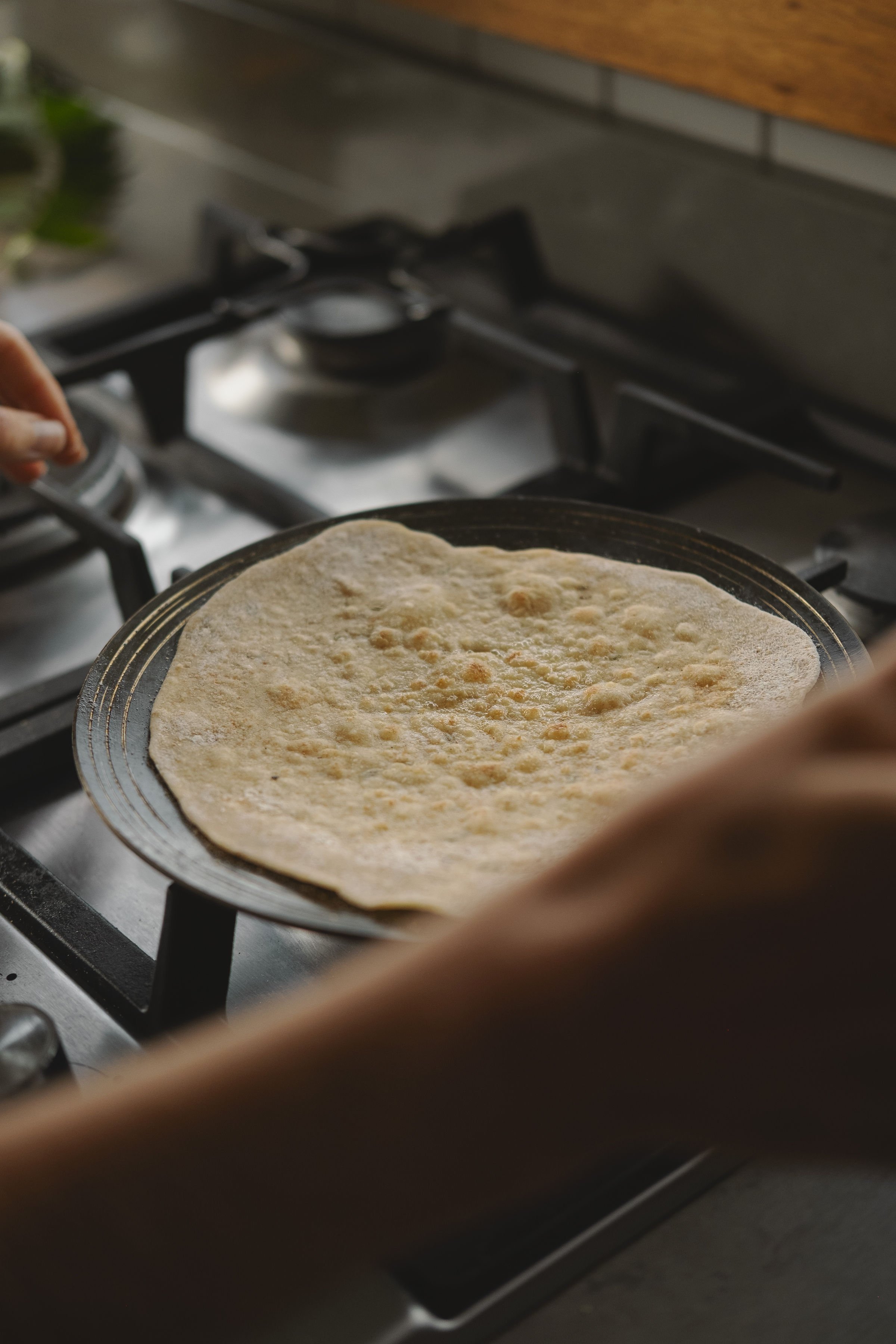
In Ayurveda we are always aiming to cook food as fresh as possible and this beloved chapati recipe is a simple way to enjoy freshly cooked bread every day. Chapati is a classic Indian style flat bread cooked with whole flour over a hot skillet or open flame. It is a staple in the Ayurvedic diet as an augmenting side to any vegetable dish such as a dahl or soup.

Ayurveda is a holistic system of health & healing based in nature’s wisdom. It works to bring each individual – body, mind, and spirit back into a state of true, vibrant health in alignment with nature. One of the most simple and beautiful ways we can align ourselves with nature’s rhythms is by honouring the change of season. We’ve reached spring here in the southern hemisphere and Ayurveda views the season as a time dominated by kapha dosha which holds an earthy, heavy, and slow quality.
To shift into the season, we can adopt changes in our ahar (diet) to balance kapha dosha. The foundation of Ayurvedic practice is ‘like increases like and opposites balance’ so to balance kapha dosha we must invite the opposite qualities of warmth, energy, and stimulation into our diet. We want to be moving away from the more grounding, comforting foods of winter and towards a more fresh and vibrant diet in Spring.

Abhyanga is the soothing and healing practice of self-massage that is an important part of an ayurvedic dinacharya (daily routine). It is an incredibly nourishing practice that holds countless benefits for the body and mind. Abhyanga grounds us into the body, calms our nervous system and is particularly helpful for pacifying vata dosha.
In Ayurvedic wisdom, we understand that there is subtlety in nature and that the seasons aren’t bound to dates on a calendar. Ayurveda holds the perspective that there is actually six seasons instead of four with winter being split into two subtle transitions.
Early winter is a time when vata dosha is naturally more predominant and there is a more light, dry and unstable quality as we settle into the seasonal change. During this time, you may find that you need more grounding, slowing down and softness.
Whereas in late winter, once we have grounded into the season there can be a greater sense of heaviness and stagnation as kapha dosha becomes more predominant. In the depths of winter, our body and mind naturally start calling for more stimulation, movement and heat to shake off the stagnancy.